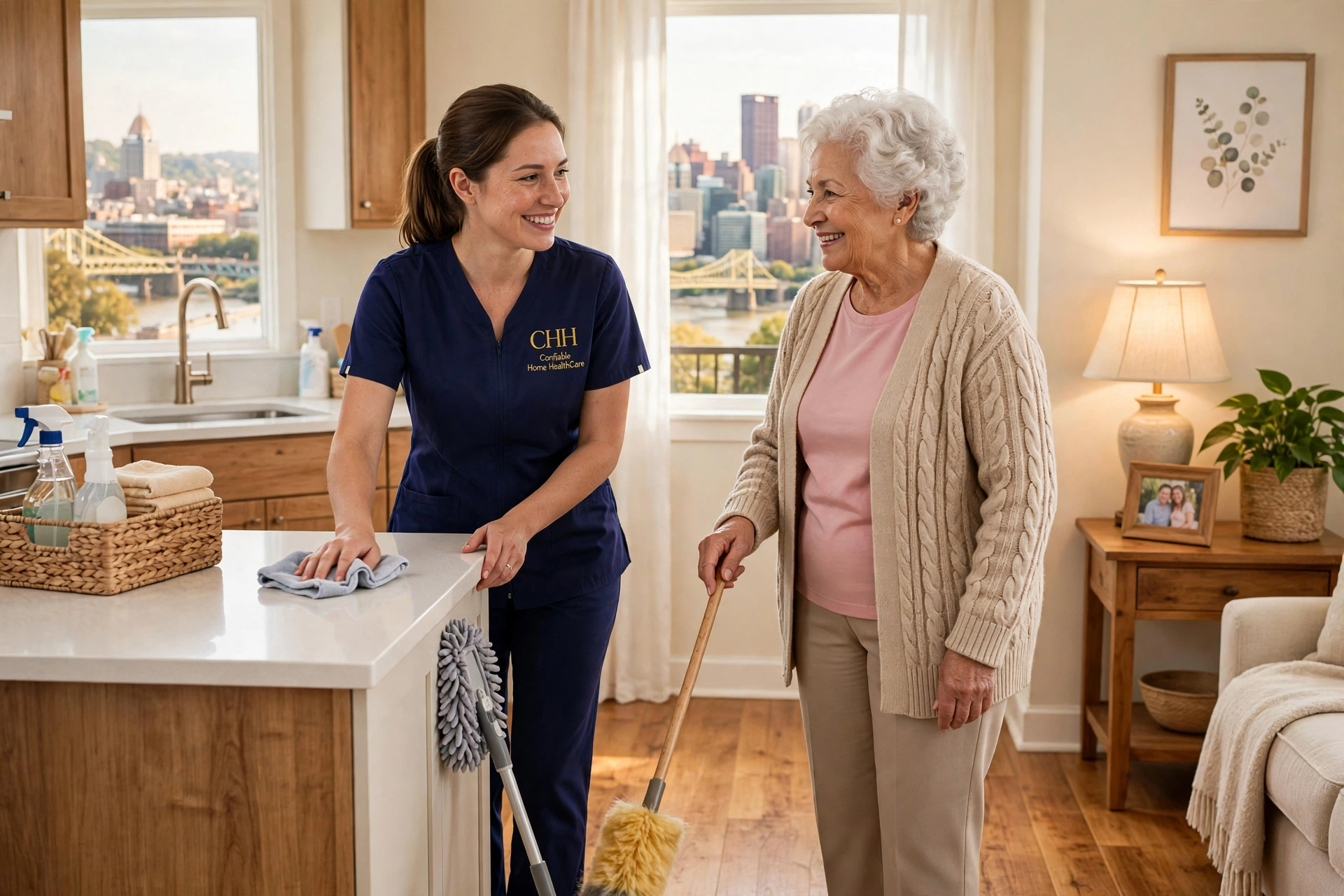


Many seniors want to continue living in the comfort of their own homes, but they may need extra support to maintain a safe, active, and fulfilling lifestyle. This companion care guide explains how companion care helps seniors through meaningful social interaction, emotional support, and assistance with everyday activities without requiring medical care.
As families in Pittsburgh look for ways to support aging parents and loved ones, companion care has become an important option for seniors who need connection, reassurance, and support while maintaining their independence. These services can help reduce loneliness, encourage daily routines, and provide families with peace of mind knowing someone trustworthy is there.
What Is Companion Care?
Companion care is a type of non-medical home care service that focuses on providing seniors with companionship, emotional support, and assistance with daily activities.
Unlike medical home health services, companion care does not focus on clinical treatments or complex medical needs. Instead, it helps seniors maintain their quality of life by providing a friendly presence, conversation, encouragement, and support with everyday tasks.
Many older adults experience loneliness after retirement, the loss of a spouse, reduced mobility, or changes in their social circle. A companion caregiver helps fill that gap by offering regular interaction and support.
For seniors living alone in Pittsburgh communities, companion care can provide an important connection that helps them feel valued, engaged, and supported at home.

Companion Care Meaning: Understanding the Role of a Care Companion
The care companion meaning refers to a professional who supports seniors by offering companionship, encouragement, and practical assistance with daily routines.
A care companion is not simply someone who stays with a senior. They build relationships, provide emotional support, and help older adults continue participating in activities they enjoy.
The definition of companion care can include services such as:
-
Spending time with seniors through conversation and social activities
-
Helping with hobbies and recreational activities
-
Preparing simple meals
-
Assisting with errands and shopping
-
Providing transportation support
-
Helping maintain a daily routine
-
Offering reminders and encouragement
The main goal of companion care is to improve a senior’s overall well-being while allowing them to remain comfortable in their own home.
What Services Does Companion Care Provide?
Companion care services are personalized based on each senior’s needs, lifestyle, and preferences. Some seniors may only need a few hours of weekly companionship, while others may benefit from more frequent support.
Social Interaction and Emotional Support
Loneliness can have a major impact on a senior’s emotional health. Regular conversations, shared activities, and meaningful connections can help seniors feel less isolated.
A companion caregiver provides a reliable presence for seniors who may spend much of their time alone. They can talk, play games, read together, watch movies, or simply provide friendly conversation.
Help With Daily Activities
Companion care may include assistance with everyday tasks that make independent living easier.
Examples include:
-
Preparing meals
-
Organizing household items
-
Folding laundry
-
Light housekeeping
-
Grocery shopping
-
Running errands
These services allow seniors to continue living independently while receiving the support they need.

Transportation and Community Activities
Many seniors reduce their social activities when driving becomes difficult. Companion care can help older adults stay connected by providing transportation assistance for:
-
Medical appointments
-
Grocery trips
-
Community events
-
Religious services
-
Family visits
Staying active in the community can improve both emotional health and overall quality of life.
Safety Monitoring and Routine Support
A companion caregiver can provide an extra level of safety by checking in regularly and noticing changes in a senior’s daily habits.
They may help seniors maintain routines, encourage healthy habits, and communicate concerns with family members when needed.
Benefits of Companion Care for Seniors
Companion care offers more than assistance with daily tasks. It supports seniors emotionally, socially, and practically.
Reduces Loneliness and Isolation
One of the biggest benefits of companion care is reducing feelings of loneliness. Many seniors experience fewer social interactions as they age, which can affect their happiness and confidence.
Having a consistent companion creates opportunities for conversation, friendship, and meaningful engagement.
Helps Seniors Maintain Independence
Many older adults want to stay in their own homes instead of moving to assisted living facilities. Companion care helps make this possible by providing support while allowing seniors to maintain control over their routines.
Provides Peace of Mind for Families
Family members often worry about an aging loved one living alone. Companion care provides reassurance that someone is checking in, offering support, and helping their loved one stay connected.
For families in Pittsburgh, professional companion care can provide dependable support when they cannot always be physically present.
Encourages Mental and Emotional Wellness
Social engagement plays an important role in senior well-being. Conversations, activities, and regular interaction can help seniors stay mentally stimulated and emotionally supported.
Companion Care vs Caregiver: What Is the Difference?
Many people use the terms caregiver and companion interchangeably, but there are important differences between the two roles.
| Companion Care | Caregiving |
|---|---|
| Focuses on companionship and emotional support | Focuses on personal and physical assistance |
| Helps with social activities and daily routines | Helps with activities of daily living |
| Usually provides non-medical support | May provide more hands-on care |
| Supports independence and quality of life | Supports seniors with greater care needs |
A caregiver and companion may have overlapping responsibilities, but the level of assistance is different.
For example, a companion may prepare meals, provide conversation, and help with errands. A caregiver may assist with bathing, dressing, mobility, or other personal care needs.
Choosing between companion care and other home care services depends on your loved one’s health, independence level, and daily needs.
Who Needs Companion Care?
Companion care can benefit many seniors, especially those who want to remain at home but need additional support.
It may be a good option for:
Seniors Living Alone
Older adults who live independently may benefit from regular visits and social interaction.
Seniors Experiencing Loneliness
A companion can provide friendship and help seniors stay connected.
Older Adults Adjusting to Life Changes
Major changes such as retirement, moving homes, or losing a spouse can create emotional challenges. Companion care offers stability during these transitions.
Families Who Need Additional Support
Family caregivers often balance work, personal responsibilities, and caregiving duties. Companion care provides extra help when families need it most.
Is Companion Care Considered Home Care?
Yes, companion care is a form of home care. It is one option within a larger range of in-home support services designed to help seniors remain safe and comfortable at home.
Home care services may include:
Companion care is often the right choice for seniors who need social support and everyday assistance but do not require extensive medical care.
Why Choose Companion Care Services in Pittsburgh?
Families throughout Pittsburgh choose companion care because it allows their loved ones to receive personalized support while staying in familiar surroundings.
A local companion care provider understands the needs of Pittsburgh seniors and their families. Professional caregivers can create personalized care plans based on lifestyle preferences, schedules, and individual needs.
At Confiable Health, our companion care services are designed to help seniors feel comfortable, connected, and supported at home. We provide compassionate in-home care solutions for families throughout Pittsburgh and surrounding communities.
How to Choose the Right Companion Care Provider
Choosing the right provider is an important decision for your family. Consider these factors:
Look for a provider with experienced and compassionate caregivers who understand senior needs.
Choose a company that offers personalized care plans instead of a one-size-fits-all approach.
Make sure communication is clear between caregivers, seniors, and family members.
Ask about caregiver training, reliability, and scheduling flexibility.
The right companion care provider should make your loved one feel respected, comfortable, and supported.
Get Compassionate Companion Care Support in Pittsburgh
Every senior deserves to feel supported, connected, and respected. Companion care provides families with a way to improve their loved one’s daily life while helping them remain comfortable at home.
If your family is looking for reliable companion care in Pittsburgh, PA, Confiable Health can help you explore the right care options based on your loved one’s needs.
Contact our care team today to learn how personalized companion care can support your family.
Frequently Asked Questions
What is companion care?
Companion care is non-medical support that helps seniors with companionship, emotional support, and everyday activities while allowing them to remain independent at home.
What does a companion caregiver do?
A companion caregiver provides social interaction, helps with daily routines, prepares meals, assists with errands, and offers emotional support.
What is the difference between a caregiver and a companion?
A companion mainly focuses on social support and daily assistance, while a caregiver may provide personal care such as bathing, dressing, and mobility assistance.
Does Medicare pay for companion care?
Medicare generally does not cover regular companion care services because they are considered non-medical care. Coverage depends on individual circumstances and available programs.
How much does companion care cost in Pittsburgh?
The cost of companion care depends on factors such as the number of hours needed, level of assistance, caregiver experience, and service provider.