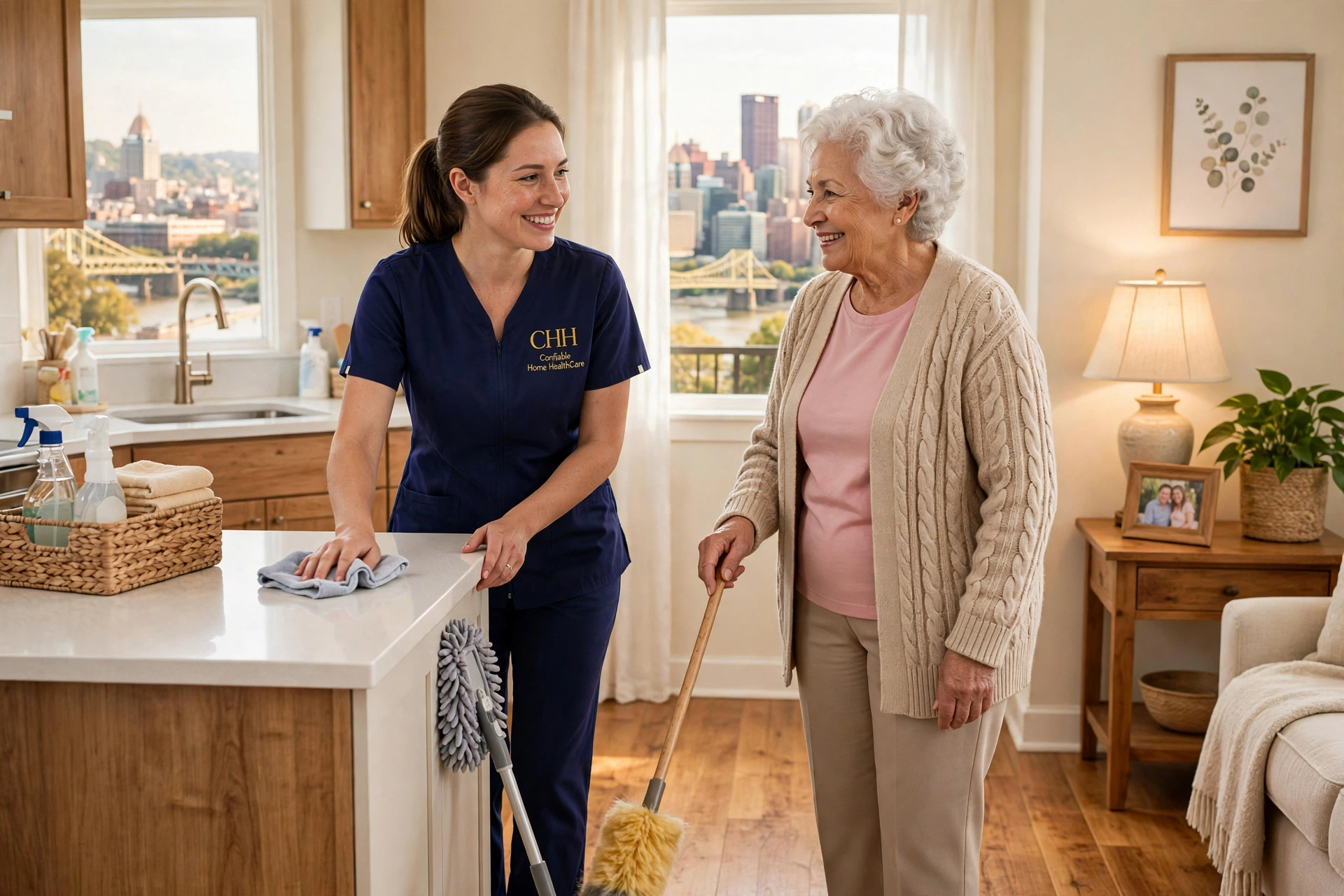


It usually happens sooner than families expect: “Your mom is doing well, and we’re planning her discharge.”
For families in the Pittsburgh area, this means both a sense of relief that a loved one will be returning home and a sense of concern about their readiness to come home. Will they be able to manage the stairs? New medication? The bathroom? Appointments?
Hospital discharge is a process that breaks down into different phases. Each of these phases presents a challenge not only to your senior but also to you as a caregiver. Here at Confiable Home HealthCare, we support families as they transition their loved ones from hospital care to home care in the Pittsburgh area. Below we’ll outline the five phases and how best to address them.
The 5 Phases of Senior Hospital Discharge at a Glance
Phase 1: The Discharge Decision
Discharge planning often begins much earlier than families realize, sometimes within the first day or two of the hospital stay.
A discharge planner or case manager evaluates your senior’s condition and starts asking the questions that shape everything that follows:
- Can they move safely around their home?
- Who is available to help them, and for how many hours a day?
- Will they need skilled nursing, therapy, or daily personal support?
- Is their home set up for a safe recovery?
This phase is largely defined by a single decision: your senior’s next steps. Some seniors go straight home. Others spend a short period of time in a rehab center or a skilled nursing facility first. There’s not necessarily a better of the two options. Which is right for your senior depends on how much assistance, therapy and supervision they need and how much of it is available at home in Pittsburgh, and whether or not they can manage it on their own starting from day 1.
This is the phase where family members can and should have the greatest impact on the plan. If there are stairs at home, your parent lives alone, or your parent is not going to be safe on their own, especially in Pittsburgh, make your feelings known now. The plan created in this phase will determine if your parent is going to be successful returning home, or if they’ll end up going back to the Emergency Room.Many families use our hospital discharge checklist for care planning to make sure nothing important is missed during these conversations.

Phase 2: The Paperwork and Preparation Phase
Once discharge is approved, the details come quickly: discharge summary, medication list, follow-up appointments, equipment orders, and care instructions.
Pay closest attention to medications. Seniors are often sent home with new prescriptions, changed doses, or medicines that should be stopped, and confusion here is one of the most common reasons seniors end up back in the hospital. Ask the care team to walk you through every medication before you leave.
This is also the phase to prepare the home:
- Clear walkways and remove tripping hazards
- Set up a comfortable recovery space, ideally on the main floor
- Arrange prescribed equipment such as a walker, shower chair, or raised toilet seat
- Stock easy-to-prepare food and daily essentials
If keeping track of new prescriptions feels overwhelming, medication management services in Pittsburgh can be arranged as part of a home care plan so doses are given correctly from day one.
Phase 3: Discharge Day
Discharge day is emotional. Your senior is often eager to leave, a little anxious, and more tired than they admit.
Before you walk out of the hospital, confirm you have:
- The written discharge summary and care instructions
- All follow-up appointments, with dates
- Prescriptions filled or a clear plan to fill them that day
- The phone number to call if symptoms worsen
- A safe ride home and someone to help them settle in
At home, keep the first hours calm and simple. Help them into their recovery space, review the evening’s medications together, and resist the urge to test how much they can do. Rest is the job today. Families who cannot be there for those first hours often arrange post-hospital care services in Pittsburgh so a trained caregiver is present when their loved one walks through the door.
Phase 4: The First 72 Hours at Home
The first three days at home are the most important phase of the entire discharge process. This is when problems most often appear:
- Medication mix-ups or missed doses
- Dizziness, weakness, or a fall
- Poor appetite and dehydration
- Confusion about wound care or activity limits
- Missed follow-up appointments
Call 911 or the doctor immediately if your elderly family member develops any of the following: a fever, increasing pain, more drainage or wound inflammation, more wound swelling or redness, increasing shortness of breath or chest pain, confusion, or inability to stay awake. Don’t wait for the scheduled follow-up to see the doctor. Call immediately if you have any concerns. Families notice changes in their elderly family member before anyone else.
Some elderly people can also become temporarily frustrated or sad during this phase. Most feel this way because they expected to come home and find that everything is back to normal, but instead they find that this makes a lot of things more difficult.
Also, be very mindful of your senior’s mobility. While they may have appeared to be steady during your visit at the hospital, they may not be as steady at home because there are no nurses around to help and no call button to push.
Falls during the first week home are a real risk, and our guide to fall prevention and home safety walks through the room-by-room checks that make recovery safer. Around-the-clock presence is not always needed, but dependable personal care services in Pittsburgh for bathing, dressing, mobility, and meals can make this phase far safer.

Phase 5: Recovery and Regaining Independence
If the first 72 hours go well, your senior moves into the steady work of recovery. Strength returns gradually. Follow-up visits confirm progress. Therapy, when prescribed, rebuilds mobility and confidence.
This phase can last weeks, and it is where many families quietly burn out. The hospital is no longer calling, relatives have gone home, and the daily work of care lands on one or two people. If you start noticing the warning signs in our guide to the signs your aging parent needs home care support, or you are exhausted yourself, that is the moment to add support rather than push through. Companion care services in Pittsburgh keep your loved one engaged and supervised, while respite care in Pittsburgh gives family caregivers real time to rest and recover too.
The goal of this final phase is not just a healed discharge. It is your senior safely back to their routines, in their own home, with the right level of support around them.
How Confiable Home HealthCare Supports Pittsburgh Families After Discharge
Confiable Home HealthCare helps Pittsburgh and Allegheny County families through every phase of hospital discharge, including:
- Care planning before your senior comes home
- Personal care with bathing, dressing, grooming, and mobility
- Medication reminders and organization
- Meal preparation, light housekeeping, and companionship
- Post-hospital supervision, including overnight and 24-hour support when needed
- Communication with families so everyone knows how recovery is going
Frequently Asked Questions
How long does hospital discharge usually take?
The decision can come quickly, but the full process, from planning to the first days at home, unfolds over several days. Families in Pittsburgh should start asking about the discharge plan early in the hospital stay rather than waiting for the discharge day itself.
What if my parent is being discharged but does not seem ready?
Tell the care team and the discharge planner directly, and be specific about what your parent cannot yet do safely. You can also ask about the hospital’s discharge appeal process. If discharge proceeds, arranging home care support before they arrive home is the most practical way to close the gap.
What help can a senior get at home after discharge in Pittsburgh?
Seniors can receive personal care, medication support, meal preparation, companionship, supervision, and skilled services when prescribed. Confiable Home HealthCare builds each post-hospital care plan around the discharge instructions and the family’s schedule.
When should we arrange home care, before or after discharge?
Before, whenever possible. Having care in place for the first 72 hours at home covers the highest-risk phase. Confiable Home HealthCare can start with short visits and adjust as your senior recovers.
Conclusion
A hospital discharge is not the end of your senior’s care journey. It is a five-phase process, and families who know the phases walk into each one prepared instead of overwhelmed. Your loved one does not have to recover alone, and you do not have to carry every phase by yourself.
Contact Confiable Home HealthCare
If your senior is being discharged from a Pittsburgh hospital, or a discharge is coming soon, contact Confiable Home HealthCare today. Call us at (412) 530-3192 to talk through your loved one’s discharge plan and arrange the right support before they come home.