

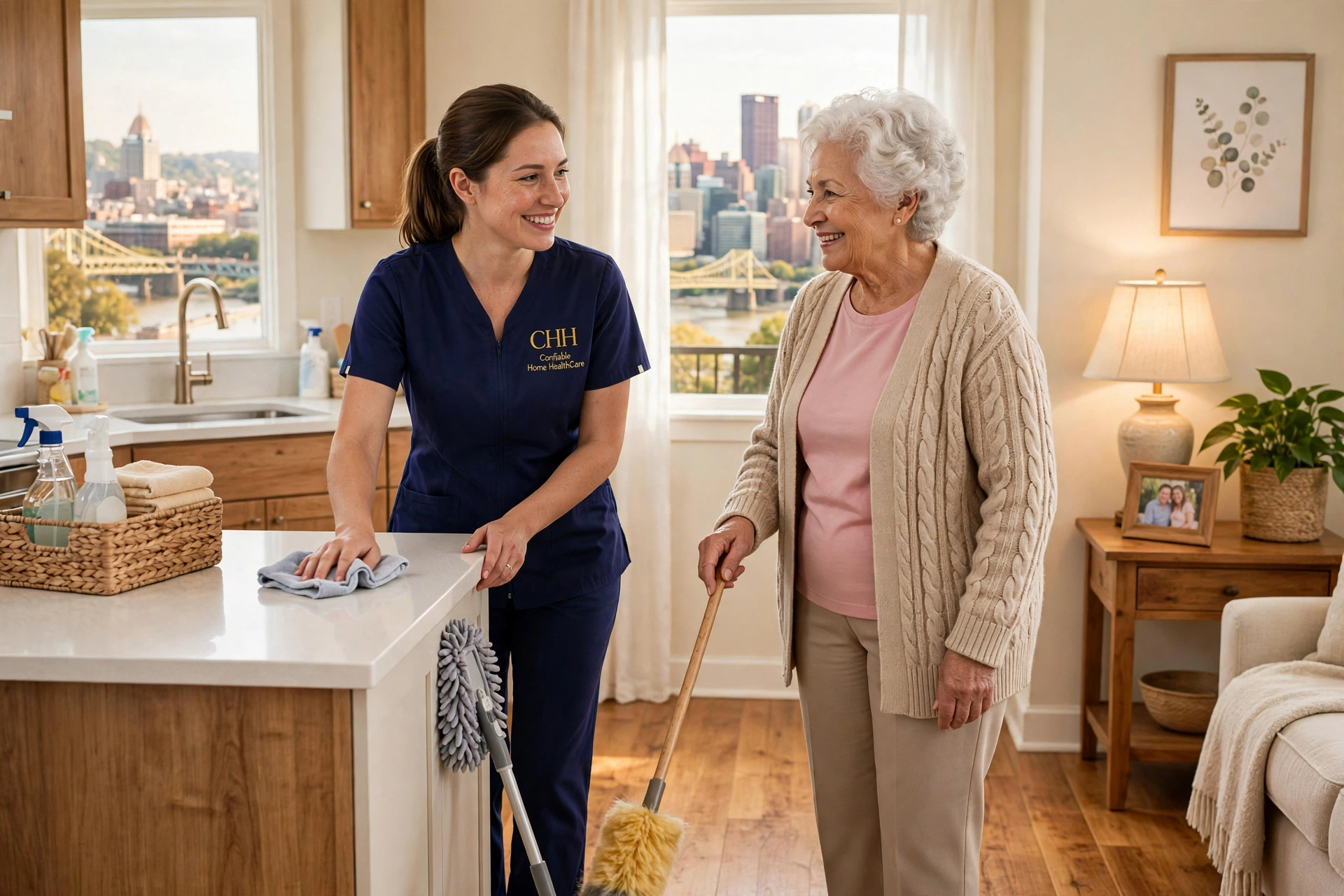
As we age, it can become harder to keep our homes clean. Simple tasks like vacuuming or bath scrubbing can become difficult due to lack of energy or time. For older adults, the appearance of a clean home is not the only reason for wanting a clean home. It can help maintain confidence and a clean, safe home can help older adults feel more comfortable.
For seniors in the Pittsburgh area, there are many options to help manage the maintenance of a home. This can help give older adults the peace of mind knowing their home can stay clean and organize. Confiable Home HealthCare is focused on giving clients the ability to care for themselves as long as they are able and want to do so. Confiable Home HealthCare also has handy housekeeping tips to help make a home safer and more organized for clients.
Why Is Keeping a Clean Home Important for Seniors?
As people grow older, changes in strength, balance, mobility, and stamina can make household chores more demanding. Tasks that once seemed simple may require additional planning or assistance. Regular cleaning and organization can help make everyday activities easier while reducing some common household hazards.
Reducing Household Safety Hazards
Disorganization and clutter present many opportunities for tripping or slipping. Cleaning for seniors means creating safe environments first, rather than striving for perfection.
There are several things we can do to safely improve the navigability of the home. Walking paths should be kept clear. Spills should be cleaned up. Rug edges should be secured. Often used items should be placed within easy reach. These ideas can be extended to various areas of the home, including the hallways, bathrooms, kitchens, and bedrooms.
Supporting Comfort and Everyday Well-Being
Dust, dirty surfaces, overflowing laundry, and accumulated clutter can make a home feel uncomfortable. Regular housekeeping helps keep commonly used spaces organized and pleasant.
A clean kitchen makes meal preparation easier, while an organized bedroom can simplify getting dressed and preparing for the day. Maintaining these spaces can also help older adults feel more comfortable inviting friends and family into their homes.
Maintaining Independence
Many older adults prefer to remain in familiar surroundings for as long as possible. A manageable cleaning routine can help them participate in household activities at a comfortable pace.
However, independence does not mean doing everything alone. When certain chores become physically demanding, asking for assistance can preserve energy for hobbies, social activities, and other meaningful parts of daily life.
Giving Family Caregivers Peace of Mind
Family members may become concerned when an older relative struggles to keep up with household responsibilities. Instead of focusing only on how the home looks, families should consider whether the senior can move around safely, prepare meals comfortably, and manage everyday activities.
Sometimes, a few organizational changes are enough. In other situations, professional housekeeping or in-home support may be helpful.
House Cleaning Tips for Seniors: 8 Practical Ways to Make Cleaning Easier
The most effective house cleaning tips for seniors focus on manageable tasks, appropriate equipment, and personal safety. Older adults do not need to complete every chore in one day to maintain a comfortable home.
1. Clean in Short, Manageable Sessions
Cleaning the entire house at once can be exhausting. Instead, divide chores into smaller tasks and take breaks whenever needed.
For example, an older adult might wipe the kitchen counter, tidy a small table, or put away a few belongings before resting. The goal is to maintain a manageable routine rather than complete every household task in a single session.
The appropriate amount of activity varies from person to person. Seniors should stop if they feel dizzy, unusually weak, or short of breath and seek medical advice when appropriate.
2. Prioritize Frequently Used Areas
Work on the areas of greatest impact on comfort and movement first, e.g. hallways, kitchens and bathrooms, and the routes between the living room and bedroom.
Move obstacles from walking paths, put shoes in a specific location, and keep frequently used items at reachable locations. Those small changes may be better than cleaning dusty, rarely used paths.
3. Choose Lightweight Cleaning Tools
Heavy vacuum cleaners, large buckets, and awkward equipment can make household chores more difficult. Lightweight tools with comfortable handles may reduce the physical effort required.
Consider a lightweight vacuum, microfiber cloths, an extendable mop, or a long-handled duster. Choose equipment that is easy to operate and appropriate for the individual’s strength and mobility.
Avoid standing on chairs or step stools to reach high shelves. Ask someone else to handle ceiling fans, high windows, and other difficult-to-reach areas.
4. Keep Cleaning Supplies Organized
Store frequently used cleaning supplies in a convenient, accessible location. Clearly labeled containers can make it easier to find what is needed without repeatedly bending or stretching.
Keep products in their original containers and follow their instructions. Never mix cleaning chemicals, especially bleach with ammonia or acidic products, because dangerous gases can form.
5. Create a Realistic Weekly Routine
A predictable routine can prevent chores from accumulating. Instead of setting aside an entire day for senior house cleaning, assign manageable tasks to different days.
For example, Monday could be for wiping kitchen surfaces, Tuesday for organizing the living room, and Wednesday for changing bed linens with assistance if needed.
The schedule should remain flexible. Seniors should be able to adjust their routines according to their energy levels, appointments, and personal preferences.
6. Keep Walking Paths Clear
Clutter can make everyday movement more difficult, particularly for older adults who use walking aids or have balance concerns.
Keep floors free of loose belongings, position electrical cords away from walking routes, and avoid leaving laundry baskets in hallways. Make sure frequently used rooms are adequately lit, including the route to the bathroom at night.
7. Ask for Help With Physically Demanding Chores
Some tasks require heavy lifting, awkward positions, or extended periods of standing. Moving furniture, deep-cleaning carpets, and scrubbing bathtubs may be difficult or unsafe for some seniors.
Family members, professional house cleaners, or home-care providers may be able to assist, depending on the task and the services available.
Asking for help is a practical way to protect comfort and independence, not a sign of failure.
8. Focus on Progress Rather Than Perfection
A home does not need to look spotless to be comfortable and functional. Focus on the tasks that make the greatest difference to daily living.
Keeping a kitchen counter clean, clearing a hallway, and organizing frequently used belongings may be more important than polishing every surface. A realistic routine is easier to maintain than an exhausting schedule.
A Simple Weekly Housekeeping Schedule for Seniors
The following schedule is an example of how home cleaning for elderly adults can be organized without making every day feel like a major project.
| Day | Suggested task | Safety consideration |
|---|---|---|
| Monday | Wipe kitchen counters and table | Clean spills promptly |
| Tuesday | Tidy the living room | Keep walking paths clear |
| Wednesday | Change bed linens or organize bedside items | Get help lifting a heavy mattress |
| Thursday | Wipe accessible bathroom surfaces | Avoid slippery floors and awkward reaching |
| Friday | Dust accessible furniture | Keep both feet on the floor |
| Saturday | Sort mail and put away everyday items | Keep important belongings accessible |
| Sunday | Rest or complete essential tasks only | Adjust the schedule according to energy levels |
This schedule is only a starting point. Some seniors may be comfortable completing light tasks independently, while others may need regular assistance with household chores. The best routine is one that fits the person’s abilities and preferences.
Room-by-Room House Cleaning for the Elderly
Each room presents different cleaning challenges. A room-by-room approach makes it easier to identify manageable tasks and determine when assistance may be necessary.
Kitchen Cleaning Tips
Since the kitchen supports the preparation and storage of meals, as well as routine activities, it is an important area to the user.
Adequate maintenance includes wipe up spills, properly clean food contact surfaces, and remove expired food, if it is safe to do so. Avoid storing pots and heavy appliances in high cabinets. Frequently used food items and dishes should be stored in lower cabinets.
Unless directed otherwise, standing for extended periods of time is acceptable. If standing for long periods is tiring, complete tasks that can be done while seated at an appropriate work surface. Never use an unstable chair or stool to reach high storage.
Bathroom Cleaning Tips
Bathrooms require particular attention because water and cleaning products can make surfaces slippery.
Wipe accessible surfaces, organize personal-care products, and remove unnecessary objects from the floor. Avoid leaning over a wet bathtub or reaching awkwardly into a shower to scrub difficult areas.
Depending on individual needs, appropriate grab bars, non-slip solutions, and other bathroom modifications may improve safety. Difficult cleaning tasks should be assigned to someone who can complete them safely.
Bedroom Cleaning Tips
A tidy bedroom can make getting dressed, changing clothes, and moving around the bed easier.
Keep the path between the bed and doorway clear, place frequently used items within easy reach, and change bedding according to personal needs.
Changing fitted sheets, lifting mattresses, and carrying heavy laundry can require considerable effort. Family members or caregivers can help with these tasks when needed.
Living Room Cleaning Tips
The living room is often a central space for relaxation and social interaction. Remove clutter from walking routes, organize magazines and remote controls, and keep electrical cords away from footpaths.
Dust accessible furniture using a lightweight cloth. Avoid moving heavy furniture alone or climbing to clean high shelves and ceiling fans.
Laundry and General Household Organization
Laundry can become physically demanding when it involves lifting full baskets, carrying wet clothing, or reaching into low machines.
Smaller loads may be easier to manage. Keep laundry supplies accessible, avoid carrying loads that obstruct visibility, and ask for assistance with heavy lifting when necessary.
These housekeeping tips can make daily responsibilities more manageable without requiring seniors to change every aspect of their routines.
Helpful Tools for Senior House Cleaning
The right equipment can make household cleaning easier by reducing unnecessary bending, lifting, and reaching.
| Traditional tool or method | Alternative to consider | Potential benefit |
|---|---|---|
| Heavy upright vacuum | Lightweight vacuum suitable for the floor type | May be easier to maneuver |
| Short-handled mop | Extendable mop with a comfortable grip | May reduce bending |
| Reaching from a chair | Long-handled duster or reacher | Helps avoid climbing |
| Large, heavy bucket | Smaller, manageable cleaning container | May reduce lifting effort |
| Dry cloth that spreads dust | Slightly damp microfiber cloth where appropriate | Helps collect dust on suitable surfaces |
| Carrying heavy laundry | Smaller laundry loads or a suitable laundry cart | May reduce the weight carried |
Choose tools that match the user’s strength, grip, balance, and mobility. Make sure equipment is in good condition and that cords do not cross walking routes.
Cleaning products should be used according to their labels. Homemade mixtures are not automatically safer than commercial products, so avoid mixing ingredients or applying products to surfaces for which they are not intended.
Can You Clean for Seniors? Understanding the Available Options
Cleaning assistance is available for older adults, but the right service depends on what help they need. Some older adults just need assistance with home chores from time to time, while others benefit from a regular housekeeping service, or a professional cleaning service.
When families ask if you clean for seniors, you have to understand what level of house cleaning service they need.
House cleaning for seniors can include scrubbing the bathroom, mopping, or vacuuming.
Light Housekeeping Through Home Care
Light housekeeping may include tidying commonly used spaces, wiping accessible surfaces, assisting with laundry, changing bed linens, or helping maintain an orderly living area. The exact tasks depend on the provider and the individual’s care plan.
Confiable Home HealthCare provides information about the role of light housekeeping in supporting older adults. Families can read the complete guide to light housekeeping services for seniors to better understand the difference between routine household assistance and intensive cleaning.
Dedicated Professional House-Cleaning Services
Professional house cleaners may offer more intensive services, including deep cleaning kitchens and bathrooms, washing floors throughout the home, cleaning windows, and tackling larger cleaning projects.
The specific tasks depend on the cleaning company and the package selected. Families should confirm what is included before scheduling a service.
Family and Community Assistance
Relatives, friends, and community organizations may also help with particular chores. Families can divide tasks according to their availability and arrange professional assistance for work that requires specialized equipment or more physical effort.
Home Care Housekeeping vs. Professional House Cleaning
Understanding the difference between these options can help families choose assistance that matches their needs.
| Feature | Light housekeeping through home care | Professional house cleaning |
|---|---|---|
| Main purpose | Support everyday living and household routines | Clean and maintain the home |
| Typical tasks | Tidying, basic laundry assistance, and routine household chores | Vacuuming, mopping, bathroom cleaning, and deeper cleaning, depending on the package |
| Relationship to personal care | May form part of a broader home-care plan | Usually focused on cleaning rather than personal care |
| Service frequency | Based on the home-care arrangement | Based on the cleaning company’s schedule |
| Best suited for | Seniors who need help managing everyday activities | Seniors who need regular or intensive cleaning work |
| What to confirm | Which household tasks are included in the care plan | Which rooms, surfaces, and cleaning tasks are included |
Services vary by provider, so families should confirm exactly what is offered before arranging assistance. Home care does not automatically include every type of cleaning, and a professional house cleaner does not necessarily provide personal care or companionship.
Pittsburgh families exploring in-home support can also review home care services in Pittsburgh to learn about available care options and determine which questions to ask when speaking with a provider.
How to Know When a Senior Needs a Cleaner or Additional Help
It can be difficult for families to recognize when household chores have become too demanding. A home may gradually become harder to maintain, particularly when an older adult experiences changes in mobility, stamina, or daily functioning.
Consider discussing additional assistance if you notice:
- Dust, dirty dishes, or laundry accumulating regularly.
- Bathrooms or kitchen areas becoming difficult to maintain.
- Clutter developing around frequently used walking routes.
- An older adult avoiding chores because they cause discomfort or exhaustion.
- Family members spending more time cleaning than they can reasonably manage.
- Heavy tasks repeatedly being postponed because no one can complete them safely.
A senior cleaner or home-care professional may be helpful depending on the type of assistance required. If the main need is intensive cleaning, a dedicated cleaning service may be appropriate. If household chores are one part of a broader need for daily living support, discussing a home-care plan may make more sense.
Families should focus on whether the home is comfortable, usable, and suitable for the person’s current needs rather than judging its appearance.
How Families Can Help With Cleaning for Senior Citizens
Family support can make household chores more manageable without taking away an older adult’s independence. Start by asking which tasks have become difficult and what kind of assistance the person would prefer.
Some seniors may want to handle light dusting and organizing while a family member takes care of heavy laundry or bathroom scrubbing. Others may prefer regular assistance so that household chores do not become a source of stress.
Families can also help by organizing supplies, discussing ways to reduce trip hazards, and creating a realistic cleaning schedule. Avoid making unnecessary changes to the placement of important belongings, because older adults may rely on familiar arrangements.
When cleaning becomes an ongoing challenge, discuss the available options together. Professional house cleaning for seniors, family assistance, community resources, and home-care services can all play different roles depending on the situation.
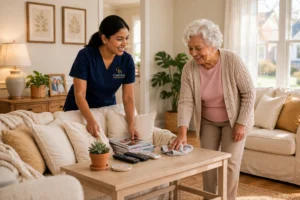
Supporting Seniors at Home With Confiable Home HealthCare
For many older adults, home is where familiar routines, treasured memories, and a sense of independence come together. Keeping that environment clean and organized can support comfort, but household chores should not become an unnecessary source of physical strain or worry.
Confiable Home HealthCare supports families seeking home-care services in Pittsburgh and surrounding communities. If an older loved one is finding everyday activities more difficult, discussing their needs with a care provider can help the family understand which types of support may be appropriate.
The right arrangement depends on the person’s preferences, daily routine, and required level of assistance. Families can learn more about personal care services in Pittsburgh if their loved one also needs help with everyday activities such as bathing, dressing, grooming, or mobility.
You can also learn why families choose Confiable Health to understand the agency’s approach to personalized care, communication, and helping older adults remain comfortable at home.
Whether your family needs guidance about home-care options or is exploring assistance with everyday household activities, the next step is to ask questions, clarify the available services, and choose an arrangement that respects the senior’s dignity and independence.
Contact Confiable Home HealthCare to discuss your family’s needs and confirm which services may be available in your area.
Frequently Asked Questions
1. What are the best house cleaning tips for seniors?
The most useful house cleaning tips for seniors include cleaning in short sessions, prioritizing frequently used areas, choosing lightweight tools, keeping walkways clear, and asking for assistance with heavy or high-reaching tasks. Seniors should adapt their routines to their individual abilities and take breaks whenever needed.
2. Can you clean for seniors who have difficulty moving around?
Yes, cleaning assistance can be arranged for seniors with mobility challenges. The type of service depends on their needs. A professional cleaning company may handle intensive cleaning, while a home-care provider may offer certain light housekeeping tasks as part of an agreed-upon care plan. Families should confirm available services before booking.
3. What is the difference between house cleaning for elderly adults and light housekeeping?
House cleaning may include detailed or intensive tasks such as scrubbing bathrooms, cleaning floors, and deep cleaning rooms. Light housekeeping generally focuses on everyday household tasks, such as tidying, organizing commonly used spaces, and certain laundry activities. The exact distinction depends on the provider.
4. How often should a senior’s home be cleaned?
There is no universal schedule. Light daily tidying, weekly surface cleaning, and periodic deeper cleaning may work for some households. Others may need more frequent help because of mobility limitations, pets, allergies, or other household needs. The routine should reflect the person’s preferences and circumstances.
5. Where can Pittsburgh families find help with senior house cleaning?
Pittsburgh families can explore professional house-cleaning companies, family assistance, community resources, and home-care providers that offer relevant light housekeeping services. Confiable Home HealthCare can help families begin a conversation about home-care needs. Contact the agency directly to confirm service availability and whether the required household tasks are included.
Conclusion
House cleaning for seniors should focus on creating a comfortable, organized, and practical living environment rather than achieving perfection. Small tasks, appropriate tools, a flexible routine, and a willingness to ask for help can make household maintenance easier for many older adults.
For seniors in Pittsburgh, the right approach may involve independent light cleaning, support from family, a professional cleaner, or an appropriate home-care arrangement. By recognizing personal limits and choosing suitable assistance, older adults and their families can work toward a home that supports comfort, dignity, and independence.
Confiable Home HealthCare encourages families to discuss their home-care needs and explore appropriate support options. A clean, manageable home can be one part of helping seniors feel comfortable in the place they know and love.