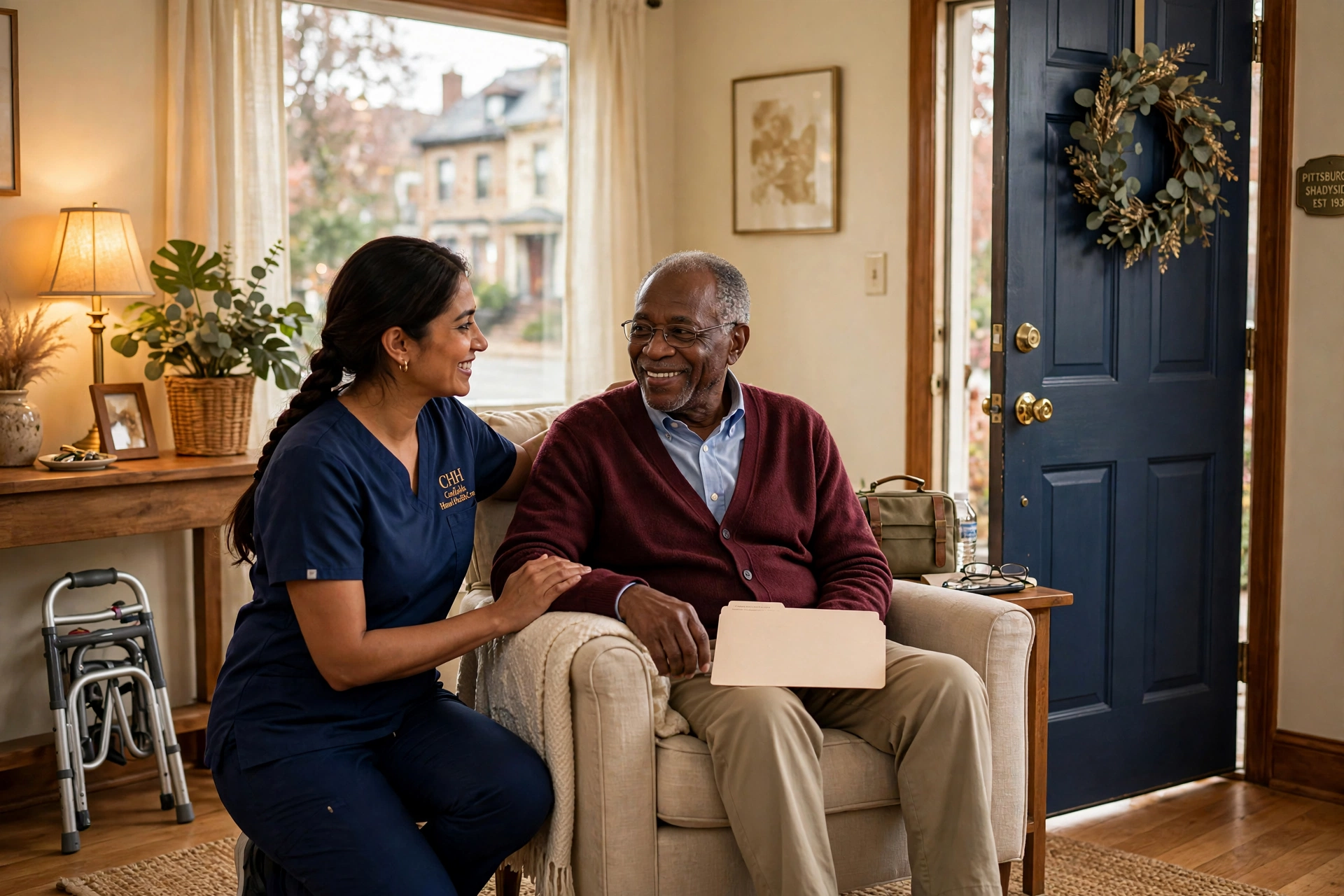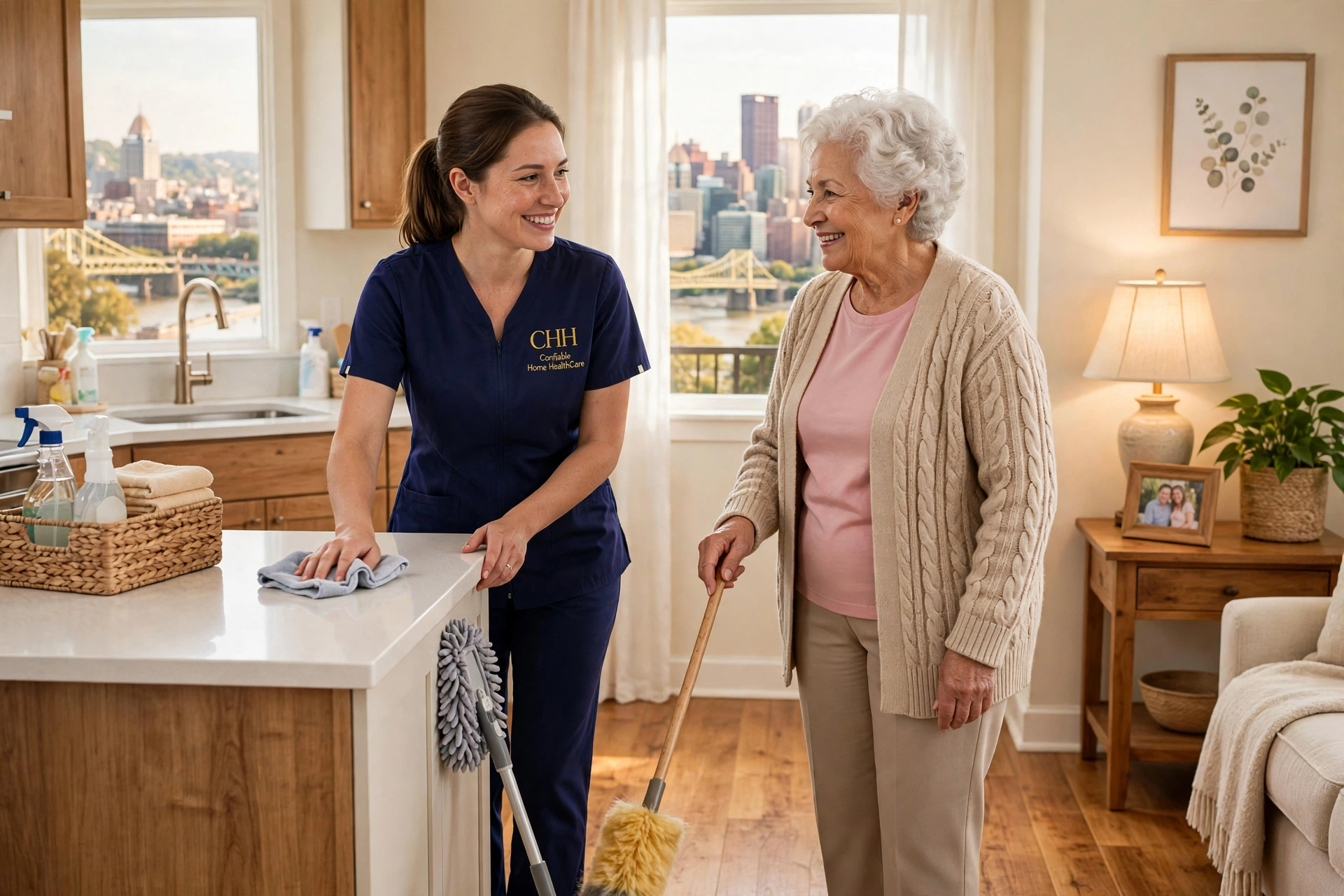


Choosing care for a loved one is one of the most important decisions a family can make. For many families in Pittsburgh, understanding when care may be needed and what options are available is the first step in the in-home care journey.
“Something has changed, and my loved one may need more support to remain safe and independent at home.”
Maybe an aging parent is having difficulty managing daily activities. Maybe mobility has become more challenging. Maybe a family caregiver is overwhelmed trying to balance work, family responsibilities, and caregiving. This guide explains how families can recognize changing care needs, understand different levels of support, compare available options, and plan the next steps with confidence.
Families often do not know where to begin:
- Does my loved one need home care or home health care?
- How much assistance is appropriate?
- Can they continue living safely at home?
- What services are available in Pittsburgh?
- How do we choose a trustworthy provider?
The goal of home care is to help individuals maintain independence, safety, comfort, and quality of life while remaining in the familiar environment they know best.
For many seniors, staying at home is not simply about convenience. Home represents memories, independence, personal routines, and emotional security.
Professional home care services in Pittsburgh provide families with support tailored to their unique needs — from assistance with daily activities and companionship to specialized care for individuals managing complex health challenges.
At Confiable Health, care begins with understanding the person behind the need. Every individual has different goals, preferences, routines, and challenges. The right care plan focuses not only on what assistance someone needs, but also on helping them continue living with dignity and confidence.
This guide explains everything families need to know about home care services in Pittsburgh, including available services, home health options, costs, specialized care, and how to choose the right provider.
The short video below provides an overview of home care, including common services, care options, and how families can begin understanding their support needs.
What Is Home Care?
Home care is professional support provided in a person’s home to help them maintain independence and safely manage everyday life.
Unlike institutional care settings, home care allows individuals to receive assistance where they are most comfortable: their own home.
Home care can range from a few hours of weekly assistance to around-the-clock support depending on a person’s needs.
Many families choose home care because it allows their loved ones to continue participating in their normal routines while receiving help with activities that have become difficult.
Examples include:
- Getting dressed
- Bathing and personal hygiene
- Preparing meals
- Household tasks
- Transportation assistance
- Medication reminders
- Companionship
- Mobility support
The purpose of home care is not to remove independence. It is to support independence.
A caregiver may help an older adult safely complete daily activities while allowing that person to remain involved in decisions about their own life.
Home Care and Aging in Place
Aging in place means remaining in a familiar home and community as a person grows older, rather than automatically moving to a residential care setting.
For many seniors, aging in place provides emotional benefits because they remain connected to:
- Their home environment
- Their neighborhood
- Their memories
- Their personal routines
- Their community
However, successful aging in place often requires planning.
For families living in nearby communities, professional support can help make aging in place possible while allowing seniors to remain connected to their homes and neighborhoods. Families looking for care outside central Pittsburgh can explore home care services in Penn Hills and other surrounding areas.
Families may need to consider:
- Safety concerns
- Mobility changes
- Health conditions
- Transportation
- Nutrition
- Social connection
- Caregiver availability
Professional support can help bridge the gap between wanting to remain at home and needing additional assistance.
Home Care vs Home Health Care
One of the most common questions families ask is:
“What is the difference between home care and home health care?”
Although these terms sound similar, they provide different types of support.
Home Care
Home care is generally focused on non-medical assistance and daily living support.
Examples include:
- Personal care
- Companionship
- Homemaking
- Respite support
- Daily activity assistance
Home care helps people function safely and comfortably in their everyday lives.
Home Health Care
Home health care involves skilled medical services provided by licensed healthcare professionals.
Examples include:
- Skilled nursing
- Physical therapy
- Occupational therapy
- Speech therapy
- Wound care
- Clinical monitoring
Home health care is typically focused on medical needs, recovery, and treatment support.
Some individuals may need only home care, while others may benefit from a combination of home care and home health services in Pittsburgh.
Understanding the difference helps families choose the right type of support.
Types of Home Care Services in Pittsburgh
Every person’s care needs are different.
Some older adults may only need occasional assistance with daily activities, while others may require more consistent support because of mobility challenges, chronic conditions, memory changes, or caregiver availability.
The right home care plan is based on the individual — their lifestyle, preferences, safety needs, and personal goals.
Professional home care services in Pittsburgh can include several types of support designed to help seniors and individuals remain comfortable and independent at home.
Personal Care Services
Personal care is one of the most common types of home care assistance.
As people age, everyday activities that were once simple can become more challenging. Tasks such as bathing, dressing, grooming, and moving safely around the home may require additional support.
Personal care services provide respectful assistance while protecting a person’s dignity and independence.
Examples of personal care assistance include:
- Bathing and shower assistance
- Dressing and changing clothes
- Grooming and personal hygiene
- Mobility assistance
- Toileting support
- Assistance with daily routines
- Safety supervision
For many families, personal care is not about taking away independence. It is about providing the right level of support so a loved one can continue living safely at home.
A caregiver may assist with a morning routine, help prepare someone for the day, or provide support during activities that have become difficult.
This type of care can be especially helpful for seniors experiencing:
- Reduced mobility
- Balance concerns
- Weakness after illness or hospitalization
- Difficulty completing daily activities independently
Families looking for dedicated assistance with daily living activities can explore professional personal care services in Pittsburgh as part of a customized home care plan.
Companion Care
Loneliness and social isolation are important concerns for many older adults.
Companion care focuses on providing meaningful human connection, emotional support, and assistance with everyday activities.
A caregiver companion can become a trusted presence who helps seniors maintain engagement and connection.
Companion care may include:
- Conversation and social interaction
- Reading together
- Playing games or participating in hobbies
- Accompanying clients on walks
- Transportation assistance for appointments or errands
- Encouragement with daily routines
- Meal companionship
For families who cannot always be present because of work, distance, or other responsibilities, companion care provides reassurance that their loved one has someone checking in and spending meaningful time with them.
Social connection plays an important role in overall well-being. A consistent caregiver relationship can help seniors feel supported, valued, and less alone.
Families seeking emotional support and companionship for an aging loved one can consider companion care in Pittsburgh as part of a broader home care approach.
Homemaking Services
Maintaining a household can become increasingly difficult as people age.
Homemaking services help seniors manage everyday household responsibilities so they can continue living comfortably in their own homes.
These services are designed to support daily living and create a safer, more manageable home environment.
Homemaking assistance may include:
- Meal preparation
- Grocery shopping assistance
- Light housekeeping
- Laundry
- Organizing household items
- Running errands
- Maintaining a clean and comfortable living space
For many seniors, small household challenges can become larger problems over time.
Difficulty preparing nutritious meals, keeping up with cleaning, or managing errands may affect independence and safety.
Homemaking support helps address these challenges while allowing individuals to remain involved in their daily routines.
Respite Care
Family caregivers often provide extraordinary support for their loved ones.
However, caregiving can become physically and emotionally demanding, especially when one person carries most of the responsibility.
Respite care provides temporary support that allows family caregivers to take time for themselves while ensuring their loved one continues receiving quality assistance.
Respite care may be helpful when caregivers need time for:
- Rest and recovery
- Medical appointments
- Work responsibilities
- Family commitments
- Personal needs
- Short breaks from caregiving responsibilities
Taking a break does not mean a family caregiver cares less. Families managing ongoing responsibilities may also benefit from reviewing caregiver resources and support to better understand available guidance and assistance options.
In many cases, respite care helps caregivers continue providing support long-term by reducing exhaustion and preventing burnout.
A professional caregiver can step in temporarily while maintaining familiar routines and providing compassionate assistance.
Families needing temporary caregiver relief can explore respite care in Pittsburgh as a flexible support option.
24-Hour and Live-In Care
Some individuals require support beyond occasional visits.
When safety concerns, advanced needs, or ongoing supervision become important factors, families may consider 24-hour home care or live-in care.
These services provide extended caregiver availability to support individuals who may need frequent assistance throughout the day or night.
24-hour and live-in care may help individuals who experience:
- Significant mobility limitations
- Increased fall risk
- Advanced memory challenges
- Difficulty managing daily activities alone
- The need for frequent supervision
Examples of support may include:
- Assistance with personal care
- Safety monitoring
- Meal support
- Mobility assistance
- Daily routines
- Overnight supervision
The goal of continuous care is to help individuals remain safely at home while providing families with greater peace of mind.
Choosing between hourly care, overnight support, live-in care, or 24-hour care depends on the person’s needs, preferences, and family situation.
A professional care assessment can help determine the appropriate level of support.
Families exploring continuous home care options can learn more about 24-hour and live-in care in Pittsburgh to understand whether this approach fits their situation.
Choosing the Right Type of Home Care Service
Selecting the right service begins by understanding the person’s current needs and future challenges.
Families should consider questions such as:
- What activities are becoming difficult?
- Does my loved one need help with personal care?
- Are they experiencing loneliness or isolation?
- Are household responsibilities becoming overwhelming?
- Is a family caregiver feeling exhausted?
- Are there safety concerns at home?
- Is more consistent supervision needed?
The best care plan is not always the most intensive option.
The goal is to provide the appropriate level of support while respecting independence and personal preferences.
A person who only needs help with meals and companionship may require a different approach than someone recovering from hospitalization or managing a complex condition.
The Importance of Personalized Care Plans
Every individual has a different story.
Two people with the same age or diagnosis may have completely different needs, routines, and goals.
Effective home care focuses on personalization.
A strong care plan considers:
- Daily routines
- Personal preferences
- Family involvement
- Health considerations
- Safety needs
- Cultural values
- Lifestyle goals
For example, one senior may want assistance preparing meals and transportation to appointments, while another may need help with mobility and personal care.
The purpose of professional home care is to create support around the person’s life — not force the person to adapt to a generic care model.
Home Health Services in Pittsburgh
Home care and home health care are often discussed together, but they are not the same service.
For families trying to decide what kind of support a loved one needs, understanding this distinction is essential.
Home care generally focuses on non-medical support, such as help with bathing, dressing, meals, companionship, mobility, errands, and daily routines.
Home health care involves skilled clinical services provided in the home by licensed healthcare professionals.
A person may need one or both.
For example, an older adult recovering from a hospitalization may receive skilled nursing or therapy through home health while also receiving non-medical in-home support for meals, mobility, personal care, or supervision.
The right combination depends on the person’s medical needs, functional abilities, recovery goals, and level of independence.
What Is Home Health Care?
Home health care brings certain healthcare services into a person’s residence.
Instead of traveling to a facility for every aspect of care, eligible patients may receive skilled services at home when appropriate.
These services may support people who are:
- Recovering from surgery
- Transitioning home after hospitalization
- Managing a chronic condition
- Healing from an injury
- Experiencing reduced mobility
- Requiring skilled nursing observation
- Recovering strength after illness
Home health care is typically provided according to an individualized clinical plan.
The purpose may include supporting recovery, improving function, monitoring health needs, educating patients and families, and helping prevent avoidable complications.
Because home health involves medical care, specific services should be provided by appropriately qualified healthcare professionals.
Families should speak with the patient’s physician, discharge team, or healthcare provider to determine which clinical services are appropriate.
Non-Medical Home Care vs. Clinical Home Health Care
The easiest way to understand the difference is to ask:
Does the person primarily need help living safely day to day, or do they need skilled medical treatment or rehabilitation?
Non-medical home care may include:
- Bathing assistance
- Dressing
- Grooming
- Meal preparation
- Companionship
- Household support
- Mobility assistance
- Transportation
- Respite for family caregivers
- Daily safety supervision
Clinical home health care may include:
- Skilled nursing
- Physical therapy
- Occupational therapy
- Speech therapy
- Wound care
- Medication-related clinical support
- Health monitoring
- Patient and caregiver education
These two types of care frequently complement one another.
Consider a common family situation.
A senior is discharged from the hospital after an illness. A nurse may visit to monitor the person’s clinical condition, while a therapist helps rebuild strength or mobility.
However, the person may still have difficulty preparing meals, bathing safely, getting dressed, or moving around the house when healthcare professionals are not present.
That is where non-medical home care can provide additional day-to-day support.
The distinction matters because families should not assume that one type of service automatically replaces the other.
Skilled Nursing at Home
Skilled nursing provides clinical care in a person’s home when nursing services are medically appropriate.
Depending on the individual’s care plan and clinical needs, skilled nursing may involve services such as:
- Monitoring health changes
- Assessing symptoms
- Reviewing care instructions
- Supporting medication-related needs
- Providing certain treatments ordered by a medical provider
- Educating patients and family caregivers
- Communicating relevant changes to the healthcare team
Skilled nursing can be especially important after a hospitalization or when someone is managing a health condition that requires professional monitoring.
For families, having qualified nursing support in the home may also make it easier to understand complicated care instructions.
Hospital discharge can sometimes leave families with multiple medications, follow-up appointments, restrictions, equipment instructions, and new responsibilities.
A skilled healthcare professional can help patients and caregivers understand the clinical plan and identify concerns that should be discussed with the treating physician.
Families whose loved ones require medical care in the home can explore available skilled nursing services in Pittsburgh to better understand the appropriate level of clinical support.
Physical Therapy at Home
Physical therapy focuses on improving movement, strength, balance, and physical function.
A person may need physical therapy after:
- Surgery
- Hospitalization
- Injury
- Illness
- Extended periods of inactivity
- Changes in strength or mobility
Receiving physical therapy at home can be particularly useful for people who have difficulty traveling to an outpatient clinic.
Families can explore physical therapy services in Pittsburgh to understand how rehabilitation support may help improve mobility and independence.
A physical therapist may evaluate how the person moves within their actual home environment.
This can include practical challenges such as:
- Getting in and out of bed
- Standing safely
- Walking through hallways
- Using stairs
- Moving between rooms
- Using mobility equipment correctly
Therapy goals vary by individual.
For one person, the goal may be walking safely from the bedroom to the kitchen.
For another, it may involve improving strength after surgery or reducing the difficulty of completing everyday movements.
Home care can complement physical therapy by providing non-clinical support between therapy visits.
For example, a caregiver may assist with daily routines, mobility support, meal preparation, or personal care while the person continues working toward rehabilitation goals established by their healthcare team.
Occupational Therapy at Home
Occupational therapy helps people improve or adapt the skills they need for everyday activities.
Despite its name, occupational therapy is not limited to employment.
In healthcare, the word “occupation” can refer to the daily activities that make up a person’s life.
These may include:
- Dressing
- Bathing
- Preparing meals
- Using the bathroom
- Moving safely around the home
- Completing household routines
- Using adaptive equipment
Occupational therapists may evaluate how a health condition, injury, or physical limitation affects a person’s ability to function independently. Families can explore occupational therapy services in Pittsburgh to understand how therapy may support safer daily living activities
Because therapy happens in the home, the therapist may also identify practical challenges within the person’s actual environment.
For example, a senior may have difficulty reaching certain items, navigating a bathroom, or completing dressing tasks after a stroke or hospitalization.
Occupational therapy may help identify safer ways to perform those activities.
Non-medical caregivers can then support the individual with daily routines while respecting the clinical recommendations provided by licensed professionals.
Speech Therapy at Home
Speech therapy can address more than speech alone, and families may explore speech therapy services in Pittsburgh when communication, swallowing, or cognitive challenges require professional support.
Depending on the person’s condition and clinical needs, speech-language professionals may assist with difficulties involving:
- Communication
- Speech
- Language
- Cognitive communication
- Swallowing
These challenges may occur after certain illnesses, neurological conditions, injuries, or other changes in health.
For someone recovering from a stroke, for example, communication may become more difficult.
Another person may experience swallowing concerns that require professional evaluation and guidance.
These issues should be evaluated by qualified clinicians because they can involve significant health and safety considerations.
Families should follow the recommendations of the treating healthcare professionals and avoid attempting to manage swallowing or communication disorders without appropriate clinical guidance.
Wound Care at Home
Wounds can require careful monitoring and professional treatment.
Depending on the nature of the wound and the medical plan, skilled wound care may include:
- Wound assessment
- Dressing changes
- Monitoring healing
- Watching for concerning changes
- Patient education
- Family caregiver education
- Following treatment instructions from the healthcare provider
Wound care may be relevant for people recovering from:
- Surgery
- Certain injuries
- Pressure-related skin damage
- Chronic health conditions
- Other medical situations affecting skin integrity
Families should not attempt to diagnose or independently treat complex wounds.
Changes such as increased pain, drainage, redness, swelling, fever, or other concerning symptoms should be discussed promptly with the appropriate healthcare professional.
For individuals who require skilled treatment at home, families can review professional wound care services in Pittsburgh as part of a coordinated home health plan.
Medication Management and Medication Support
Medication routines can become complicated, particularly when a person takes several prescriptions or has recently returned home from the hospital.
Potential challenges include:
- Forgetting doses
- Taking medications at the wrong time
- Confusion after prescription changes
- Difficulty organizing medications
- Trouble understanding discharge instructions
- Uncertainty about side effects or medication interactions
The appropriate type of medication support depends on the service being provided and the qualifications of the professional involved.
A non-medical caregiver may be able to provide reminders within the boundaries of the care plan, while licensed healthcare professionals may handle clinical medication-related responsibilities when medically necessary and legally permitted.
Families should maintain an up-to-date medication list and discuss questions about prescriptions, dosage, side effects, or medication changes with the prescribing clinician or pharmacist.
Medication questions should never be resolved by guesswork.
When Might Someone Need Home Health Services?
Home health care may be considered when a person has clinical needs that require professional attention in the home.
Common situations may include:
- Returning home after hospitalization
- Recovering from surgery
- Requiring wound treatment
- Experiencing reduced strength or mobility
- Needing rehabilitation
- Managing complex medical needs
- Requiring skilled nursing monitoring
However, the presence of a medical diagnosis does not automatically determine the appropriate service.
The individual’s physician or healthcare team should help establish whether skilled home health services are medically appropriate.
Can Someone Receive Home Care and Home Health Care at the Same Time?
Yes. In many situations, the two services address different needs.
Imagine an older adult returning home after surgery.
A home health professional may provide clinical services such as nursing or therapy.
But the person may also need assistance with:
- Bathing
- Dressing
- Meals
- Walking safely
- Household routines
- Transportation
- Supervision
Those daily living needs may be addressed through home care.
This combination can create a more complete support system.
Clinical professionals focus on medical treatment and rehabilitation.
Caregivers focus on helping the individual manage everyday life safely and comfortably.
Coordinating Care After a Hospital Stay
The period immediately after hospitalization can be stressful for both patients and families.
A person may return home with:
- New medications
- Follow-up appointments
- Activity restrictions
- Therapy recommendations
- Medical equipment
- Dietary instructions
- Wound care instructions
- New mobility limitations
Families may suddenly have to coordinate several parts of the recovery process.
Planning can make the transition easier, and a hospital discharge checklist can help families prepare for medications, appointments, safety needs, and recovery support.
Before discharge, families should try to understand:
- What clinical services are being ordered?
- What activities will the person need help with?
- Who will be available at home?
- Are there fall or mobility concerns?
- What appointments need to be scheduled?
- What medications have changed?
- What symptoms require medical attention?
- Will the person need additional non-medical support?
Home health and home care can serve different but complementary roles during this transition. Families may also explore post-hospital care services in Pittsburgh when additional support is needed after discharge.
Later in this guide, we will look more closely at hospital recovery and transitional care, including practical questions families should ask before bringing a loved one home.
Creating a Coordinated Care Plan
Care works best when everyone understands their role.
Depending on the person’s situation, the care team may include:
- The patient
- Family members
- Physicians
- Nurses
- Therapists
- Home care caregivers
- Other healthcare professionals
Clear communication is important because needs can change.
A person who initially requires significant assistance after hospitalization may gradually become more independent.
Another individual with a progressive condition may need additional support over time.
A good care plan should therefore be reviewed as circumstances change.
Families should communicate important changes to the appropriate healthcare professionals rather than assuming that an existing care plan will always remain suitable.
The goal is not simply to provide more care.
It is to provide the right care, at the right level, for the right needs.
Specialized Home Care for Medical Conditions
Home care becomes especially important when a health condition begins affecting a person’s ability to manage everyday life independently.
A diagnosis does not tell the entire story.
Two people living with the same condition may experience very different challenges.
One individual may remain mostly independent but need help with meals and transportation.
Another may require significant support with mobility, personal care, supervision, or household routines.
For this reason, condition-based home care should focus on the person’s actual needs rather than treating every diagnosis the same way.
The following are several situations in which families may consider specialized in-home support.
Dementia Care
Dementia can affect memory, judgment, communication, routines, orientation, and safety.
As symptoms progress, activities that were once familiar may become confusing or difficult.
Families may notice changes such as:
- Repeating questions
- Forgetting appointments
- Difficulty preparing meals
- Confusion about medications
- Becoming disoriented
- Changes in sleep patterns
- Difficulty completing familiar activities
- Increased safety concerns
- Changes in behavior or communication
These changes can be difficult for both the individual and the family.
A familiar environment may provide valuable consistency.
Professional dementia care at home can focus on supporting routines, safety, personal care, companionship, and meaningful daily engagement.
Consistency is particularly important.
Sudden changes in routine or environment can sometimes be difficult for people experiencing cognitive decline.
A caregiver who understands the person’s preferences, history, routines, and communication style can provide more personalized support.
Families seeking dedicated memory-related assistance can explore dementia care in Pittsburgh as part of a personalized home care plan.
Supporting Daily Routines With Dementia
Daily structure can help make life more predictable.
A caregiver may support routines involving:
- Waking and morning preparation
- Meals
- Personal hygiene
- Activities
- Rest
- Evening routines
The goal is not to argue with or continually correct someone experiencing memory changes.
Care should focus on dignity, reassurance, safety, and reducing unnecessary frustration.
Family members may also benefit from learning different communication approaches as dementia progresses.
Because sudden or significant behavioral changes may sometimes have medical causes, families should discuss new concerns with the person’s healthcare provider.
Alzheimer’s Care
Alzheimer’s disease is a progressive neurological condition and a common cause of dementia.
As Alzheimer’s progresses, individuals may need increasing assistance with everyday activities.
Families may encounter challenges involving:
- Memory loss
- Confusion
- Communication difficulties
- Wandering concerns
- Changes in judgment
- Difficulty with personal care
- Changes in daily routines
- Increased supervision needs
Home care can provide practical support while allowing the person to remain in familiar surroundings.
Personalized Alzheimer’s care may include:
- Routine assistance
- Personal care
- Meal support
- Companionship
- Safety supervision
- Family caregiver relief
The appropriate level of care should evolve as the person’s needs change.
Families concerned about cognitive decline should work with qualified healthcare professionals for assessment, diagnosis, and medical management.
For non-medical daily support, families can explore specialized Alzheimer’s care in Pittsburgh.
Parkinson’s Care
Parkinson’s disease can affect movement and daily functioning in different ways.
People living with Parkinson’s may experience challenges involving:
- Movement
- Balance
- Walking
- Coordination
- Daily activities
- Fatigue
Needs can vary substantially from person to person.
Some individuals remain highly independent for long periods, while others may require increasing assistance with personal care or mobility.
Home care support can focus on practical daily needs such as:
- Dressing
- Grooming
- Meal preparation
- Mobility assistance
- Household activities
- Transportation
- Companionship
Caregivers should follow the individual’s care plan and respect recommendations from physicians, therapists, and other healthcare professionals.
Families looking for additional daily assistance can explore Parkinson’s care in Pittsburgh alongside the individual’s medical treatment plan.
Diabetes Care and Daily Support
Diabetes requires appropriate medical management.
Diagnosis, medication decisions, glucose targets, insulin management, and treatment planning should remain under the direction of qualified healthcare professionals.
However, people living with diabetes may also benefit from non-medical support with everyday activities.
Depending on the individual’s needs, home care may assist with:
- Meal preparation
- Transportation to appointments
- Daily routines
- Mobility
- Household activities
- Medication reminders where appropriate
- General companionship
For some seniors, the difficulty is not understanding that diabetes requires management.
The challenge may be carrying out daily routines consistently while also managing mobility limitations, memory changes, fatigue, or other health concerns.
Families should work closely with healthcare professionals regarding clinical diabetes care while using home care for appropriate daily living support.
Those looking for condition-focused assistance can explore available diabetes care support in Pittsburgh as part of a broader care plan.
Fall Prevention and Home Safety
Falls are a major concern for many families caring for older adults.
A fall can occur for many reasons, including environmental hazards, mobility limitations, balance problems, weakness, medications, or health conditions.
Families should avoid assuming that every fall has the same cause.
Repeated falls or sudden changes in balance should be discussed with an appropriate healthcare professional.
At home, families can also look for practical safety concerns such as:
- Loose rugs
- Poor lighting
- Cluttered walkways
- Difficult stairs
- Unsafe bathroom access
- Frequently used items stored out of reach
Home caregivers may help by supporting mobility, maintaining clear walking areas, assisting with daily activities, and following established safety plans.
Physical or occupational therapists may also provide professional recommendations when mobility or environmental safety needs clinical evaluation.
Families concerned about home safety can review fall prevention support in Pittsburgh and consider whether additional in-home assistance would reduce everyday risks.
Condition-Based Care Should Still Be Person-Centered
One of the biggest mistakes families can make is choosing care based only on a diagnosis.
A diagnosis provides important medical information, but it does not describe the entire person.
Good home care also considers:
- Independence level
- Personality
- Personal preferences
- Daily routines
- Family involvement
- Home environment
- Mobility
- Cognitive abilities
- Social needs
- Safety concerns
For example, two people with Parkinson’s disease may need completely different levels of assistance.
Likewise, two individuals living with dementia may experience different symptoms, abilities, and family situations.
The purpose of specialized home care is therefore not to fit people into a predefined category.
It is to understand how a condition affects that individual’s everyday life and build support around those specific needs.
That individualized approach connects medical realities with the practical goal shared by many families: helping a loved one remain as safe, comfortable, and independent as possible at home.
Cost of Home Care in Pittsburgh
One of the biggest questions families ask when exploring care options is:
“How much does home care cost in Pittsburgh?”
The answer depends on many factors because home care is not a one-size-fits-all service.
The cost of care is influenced by:
- The number of hours of support needed
- The type of care required
- The level of assistance involved
- Whether care is occasional, daily, overnight, or around the clock
- The individual’s health and safety needs
- The caregiver schedule
- The complexity of the care plan
Understanding the factors that affect home care costs can help families make informed decisions and plan for long-term support. Families can review this detailed home care cost guide to better understand pricing factors and planning considerations.
Factors That Affect Home Care Costs
Number of Hours of Care
One of the largest factors affecting cost is the amount of caregiver time needed.
Some individuals may only need a few hours of assistance each week.
Examples:
- Help with errands
- Companionship visits
- Meal preparation
- Household assistance
Others may require daily support.
Examples:
- Morning personal care routines
- Mobility assistance
- Meal support
- Safety supervision
- Multiple daily visits
Individuals with more advanced needs may require extended schedules, overnight support, or continuous care.
The appropriate amount of care should be based on the person’s actual needs rather than simply choosing the most or least expensive option.
Hourly Home Care vs. Full-Time Care
Families often compare different care schedules.
Part-Time Home Care
Part-time care may be appropriate for individuals who remain mostly independent but need assistance with specific activities.
Examples include:
- A few weekly companionship visits
- Help with housekeeping
- Transportation assistance
- Meal preparation
- Support after a medical appointment
This approach allows families to add support while maintaining as much independence as possible.
Daily Home Care
Daily care provides more consistent assistance.
It may help individuals who need support with:
- Personal care
- Morning and evening routines
- Mobility
- Nutrition
- Household tasks
- Safety monitoring
Daily care can also provide reassurance to family members who cannot be present throughout the day.
24-Hour Home Care
Some individuals require continuous supervision or assistance.
24-hour care may be considered when someone has:
- Significant mobility challenges
- High safety concerns
- Advanced memory-related needs
- Difficulty managing daily activities alone
- A need for frequent assistance throughout the day and night
Because this level of care involves significantly more caregiver time, it generally represents a greater financial commitment.
Families should carefully evaluate whether continuous care is necessary or whether a combination of scheduled visits and family support may meet the person’s needs.
What Determines the Right Amount of Care?
The goal of home care is not simply to purchase more hours.
The goal is to provide the appropriate support that helps someone live safely and comfortably.
Families should consider:
Daily Activities
Can the person safely:
- Bathe?
- Dress?
- Prepare meals?
- Manage household tasks?
- Move around the home?
Safety
Are there concerns involving:
- Falls?
- Confusion?
- Wandering?
- Leaving appliances on?
- Difficulty responding in emergencies?
Health Changes
Has the person recently experienced:
- Hospitalization?
- Surgery?
- Injury?
- Declining mobility?
- Increasing care needs?
Family Caregiver Availability
Many families provide care themselves.
However, caregiving responsibilities can become difficult to balance with:
- Employment
- Parenting
- Personal health
- Distance
- Other family responsibilities
Professional home care can provide additional support while allowing family members to remain involved without carrying the entire responsibility alone.
Private Pay Home Care in Pittsburgh
Many families pay for private pay home care in Pittsburgh privately based on their preferred level of support and care needs.
Private pay home care means the cost of services is paid directly by the individual or family rather than through a government program or insurance benefit.
This approach gives families flexibility because they can often choose:
- The number of care hours
- The schedule
- The type of support
- The level of involvement
Private pay home care is commonly used by families who want to create a personalized care plan based on their loved one’s needs.
What Does Private Pay Mean?
Private pay simply refers to paying directly for care services.
It may involve:
- Personal savings
- Retirement funds
- Family financial planning
- Long-term care planning
- Other personal resources
Every family’s financial situation is different.
Some families may use private funds temporarily during a transition period.
Others may plan for ongoing support as part of long-term aging preparation.
Benefits of Private Pay Home Care
Private pay care can offer several advantages.
Flexibility
Families may have more control over:
- Scheduling
- Care frequency
- Service selection
- Adjustments as needs change
For example, someone recovering from surgery may need more assistance initially and fewer hours as independence improves.
Personalized Care Plans
Because care is arranged around the individual, families can focus on the services that provide the greatest benefit.
A person may need:
- Companion care
- Personal care
- Meal support
- Transportation
- Respite assistance
Another person may need more extensive daily support.
A personalized approach helps avoid paying for unnecessary services while ensuring important needs are addressed.
Faster Access to Support
Families often seek care during important transitions:
- After a hospital discharge
- After a fall
- During a health decline
- When a caregiver becomes overwhelmed
Private pay arrangements may allow families to explore care options based on their immediate needs.
Availability depends on provider scheduling and service capacity.
Does Medicare Pay for Home Care?
This is one of the most common questions families ask.
The answer depends on the type of service and eligibility requirements.
Generally, Medicare coverage is associated with specific healthcare services and requirements rather than unlimited long-term custodial care.
Families should verify current Medicare rules and eligibility directly through official Medicare resources or their healthcare providers.
A person may have different coverage options depending on:
- Medical needs
- Insurance plan
- Physician involvement
- Eligibility requirements
- Type of service needed
It is important not to assume that every type of home support is covered.
Does Insurance Pay for Home Care?
Insurance coverage varies.
Some insurance plans may provide benefits for certain healthcare services, while others may have limitations regarding long-term personal care assistance.
Families should review their specific policy or speak with their insurance provider to understand:
- Covered services
- Eligibility requirements
- Authorization requirements
- Limitations
Long-term care insurance policies may also have specific rules regarding home care benefits.
Veterans Benefits and Home Care
Some veterans and their families may have access to programs or benefits that can help with care needs.
Eligibility depends on individual circumstances, service history, and program requirements.
Veterans and families should contact appropriate veteran benefit resources to determine what assistance may be available.
Planning for Future Home Care Costs
Many families begin thinking about care only after a crisis occurs.
However, planning earlier can make future decisions easier.
Families may want to discuss:
- Current health needs
- Future preferences
- Financial resources
- Living arrangements
- Family responsibilities
- Potential care preferences
Important conversations may include:
- “If living alone becomes difficult, what would you want?”
- “Would you prefer receiving support at home?”
- “Who would help make decisions if your needs changed?”
- “What resources are available?”
These discussions can reduce stress later because families are not trying to make major decisions during an emergency.
How to Evaluate the Value of Home Care
Cost is important, but families should also consider value.
The lowest price does not always represent the best option.
Quality home care should consider:
- Caregiver reliability
- Communication
- Training
- Personalized attention
- Respect for the individual
- Safety practices
- Compatibility between caregiver and client
A good care relationship is built on trust.
The caregiver may become an important part of a person’s daily life, so choosing a provider should involve more than comparing prices.
Questions Families Should Ask About Home Care Costs
Before starting services, families should ask:
About Pricing
- How are services billed?
- Is there a minimum number of hours?
- Are there additional fees?
- How are schedule changes handled?
About Care Plans
- How are care needs evaluated?
- Can services increase or decrease over time?
- How are changes communicated?
About Caregivers
- How are caregivers selected?
- What training do they receive?
- How is caregiver consistency handled?
- What happens if a caregiver cannot work?
The Importance of Choosing the Right Care Level
Choosing too little support can create unnecessary stress and safety concerns.
Choosing too much support may create unnecessary expense.
The goal is balance.
The right care plan should help the individual:
- Remain as independent as possible
- Stay safe at home
- Maintain dignity
- Receive appropriate assistance
- Support family caregivers
Professional guidance can help families understand available options and determine what level of care best matches their situation.
Signs Someone May Need Home Care
Many families begin searching for home care after noticing small changes. Recognizing the signs an aging parent needs help early can allow families to create a safer care plan before urgent situations develop.
Often there is not one single moment when someone suddenly “needs care.”
Instead, needs may develop gradually.
A loved one may begin struggling with everyday tasks, experiencing safety concerns, or requiring more help than family members can realistically provide.
Recognizing these signs early can allow families to create a plan before a crisis occurs. Families who are unsure about timing can also review guidance on when to consider home care and what changes may indicate additional support is needed.
Difficulty Managing Daily Activities
One of the clearest signs someone may benefit from home care is difficulty completing normal daily routines.
Examples include:
- Trouble bathing safely
- Difficulty getting dressed
- Problems preparing meals
- Challenges maintaining the household
- Difficulty managing errands
- Struggling with transportation
These changes do not mean someone has lost independence.
Often, the right support allows a person to continue living at home more safely.
Increased Falls or Mobility Problems
Mobility changes are common as people age.
Families may notice:
- More frequent falls
- Difficulty walking
- Trouble using stairs
- Needing assistance getting up or sitting down
- Avoiding activities because of fear of falling
Falls should always be taken seriously.
Families should discuss repeated falls or sudden mobility changes with appropriate healthcare professionals.
Home care may provide assistance with daily movement and safety routines while professional clinicians address medical or rehabilitation needs.
Medication Challenges
Medication routines can become difficult when someone:
- Takes multiple prescriptions
- Has memory challenges
- Has difficulty organizing medications
- Recently experienced medication changes
Medication concerns should be discussed with healthcare professionals.
Caregivers may help support daily routines according to the care plan and appropriate responsibilities.
Family Caregiver Burnout
Many family caregivers provide extraordinary love and support.
However, caregiving can become overwhelming.
Signs that a caregiver may need additional support include:
- Feeling exhausted constantly
- Difficulty balancing responsibilities
- Lack of personal time
- Emotional stress
- Physical strain
- Feeling unable to continue alone
Respite care and professional home care can help families create a more sustainable caregiving arrangement.
Home Care vs Assisted Living vs Nursing Homes
When families begin exploring care options, one of the biggest decisions is understanding whether their loved one should receive support at home or consider a residential care setting.
There is no single solution that works for every person, and comparing home care vs assisted living in Pittsburgh can help families understand which option may better fit their loved one’s needs.
The right choice depends on:
- Health needs
- Independence level
- Safety concerns
- Personal preferences
- Family support availability
- Budget considerations
Home Care
Home care allows individuals to remain in their own homes while receiving assistance with daily activities.
Benefits include:
- Familiar surroundings
- Personalized one-on-one support
- Maintaining independence
- Flexible scheduling
- Continued connection to the community
Home care may be a good option for individuals who want to age in place but need help with activities such as personal care, meals, companionship, mobility, or household tasks.
Assisted Living
Assisted living provides residential housing combined with support services.
Residents typically live in a community setting where assistance is available for daily activities.
Assisted living may provide:
- Meals
- Social activities
- Transportation
- Personal care assistance
- Community living
However, moving from a home environment can be emotionally difficult for some seniors who strongly value independence and familiarity.
Nursing Homes
Nursing homes generally provide a higher level of medical and personal care for individuals who require significant ongoing assistance.
They may be appropriate for people with complex medical needs or who require more intensive supervision.
The decision between home care, assisted living, and nursing home care should focus on the individual’s needs, preferences, and safety.
Families may also compare home care vs nursing home care in Pittsburgh when evaluating different long-term support options.
For many families, professional home care provides a way to support independence while addressing changing needs.
How To Choose A Home Care Provider in Pittsburgh
Choosing a home care provider is an important decision because caregivers become part of a person’s daily life.
Families should look beyond basic services and consider the quality, reliability, and approach of the agency. Reviewing what to look for in a home care agency can help families ask better questions before making a decision.
Important factors include:
Caregiver Quality and Training
A trusted provider should carefully select caregivers and provide appropriate preparation for their responsibilities.
Families should ask:
- How are caregivers screened?
- What experience do caregivers have?
- How is caregiver compatibility evaluated?
- What happens if a caregiver is unavailable?
Personalized Care Plans
Every person has different needs.
A strong home care agency should focus on personalized plans rather than offering identical services to every client.
Care plans should consider:
- Daily routines
- Personal preferences
- Safety needs
- Family involvement
- Changing circumstances
Communication and Family Support
Good communication helps families feel confident.
A reliable provider should have clear processes for:
- Updates
- Questions
- Schedule changes
- Care adjustments
- Addressing concerns
Families should feel like partners in the care process.
Experience and Trust
Healthcare decisions require trust.
Families should look for providers who demonstrate:
- Compassion
- Professionalism
- Reliability
- Respect for dignity
- Commitment to quality care
The best care relationships are built when caregivers understand not only what assistance someone needs, but who that person is.
Areas Served by Confiable Health Around Pittsburgh
Families throughout the Pittsburgh region often look for home care options close to where their loved ones live. Access to reliable support can make it easier for seniors to remain comfortable at home while staying connected to their familiar communities.
Confiable Health provides home care and home health support for families in Pittsburgh and surrounding areas, helping individuals receive personalized assistance based on their daily needs, health situation, and personal preferences.
Our service areas include communities throughout the region, including:
Home Care in Penn Hills
Families looking for local support can explore home care services in Penn Hills for assistance with daily activities, companionship, personal care, and other in-home needs.
Home Care in Monroeville
Home care services in Monroeville may benefit from personalized care options designed to support independence and safety at home.
Home Care in Plum
Home care services in Plum help families access support that fits their loved one’s routines, preferences, and level of assistance needed.
Home Care in Bethel Park
Families in Bethel Park can explore home care services in Bethel Park that are designed to help seniors remain comfortable, safe, and supported in their own homes while receiving personalized assistance based on their needs.
Supporting Families Across Allegheny County
Confiable Health serves families throughout Allegheny County, helping seniors and individuals access personalized home care services in Allegheny County that support daily living, recovery, safety, and ongoing care needs.
Choosing a home care provider is an important decision for families. Beyond the services offered, families want confidence that their loved one will receive respectful, reliable, and personalized support. At Confiable Health, care plans are built around each individual’s routines, preferences, safety needs, and goals. Families can learn more about why families choose Confiable Health and our approach to providing compassionate home care support.
Frequently Asked Questions About Home Care in Pittsburgh
What is home care in Pittsburgh?
Home care provides support to individuals in their own homes. Services may include personal care, companionship, homemaking, mobility assistance, and caregiver support.
How much does home care cost in Pittsburgh?
The cost depends on the number of hours needed, type of care, and individual needs. Families should evaluate their situation and create a care plan based on the appropriate level of support.
Does Medicare pay for home care?
Medicare coverage depends on eligibility requirements and the type of service needed. Families should verify coverage directly with Medicare and healthcare providers.
What is the difference between home care and home health care?
Home care focuses mainly on daily living support, while home health care provides skilled medical services such as nursing and therapy.
Can someone receive care at home after a hospital stay?
Yes. Many individuals receive home support during recovery after hospitalization. Care may include clinical services, therapy, and assistance with daily activities.
Is home care only for seniors?
No. Home care may support adults of different ages who need assistance because of illness, injury, disability, recovery, or changing abilities.
When should a family consider home care?
Families may consider home care when someone struggles with daily activities, safety, mobility, loneliness, medication routines, or when caregivers feel overwhelmed.
What services do home caregivers provide?
Services may include:
- Personal care
- Companionship
- Meal support
- Household assistance
- Mobility help
- Respite support
What is private pay home care?
Private pay means the individual or family pays directly for care services instead of using a specific insurance benefit or program.
Can home care help someone age in place?
Yes. Many families choose home care because it allows their loved ones to remain in a familiar environment while receiving needed support.
How do I choose a home care agency?
Families should consider caregiver quality, communication, experience, personalized care planning, and whether the agency understands their loved one’s needs.
Final Thoughts: Finding the Right Home Care Support in Pittsburgh
Choosing home care is not simply about finding someone to complete daily tasks.
It is about finding support that respects a person’s independence, dignity, preferences, and quality of life.
For families in Pittsburgh, the right care solution begins with understanding the person’s needs and creating a plan that fits their situation.
Whether someone needs occasional companionship, personal care assistance, specialized support, or help after a health transition, professional home care can provide families with reassurance and guidance.
The best care decisions are made with compassion, preparation, and a focus on what matters most: helping people live safely and comfortably at home.